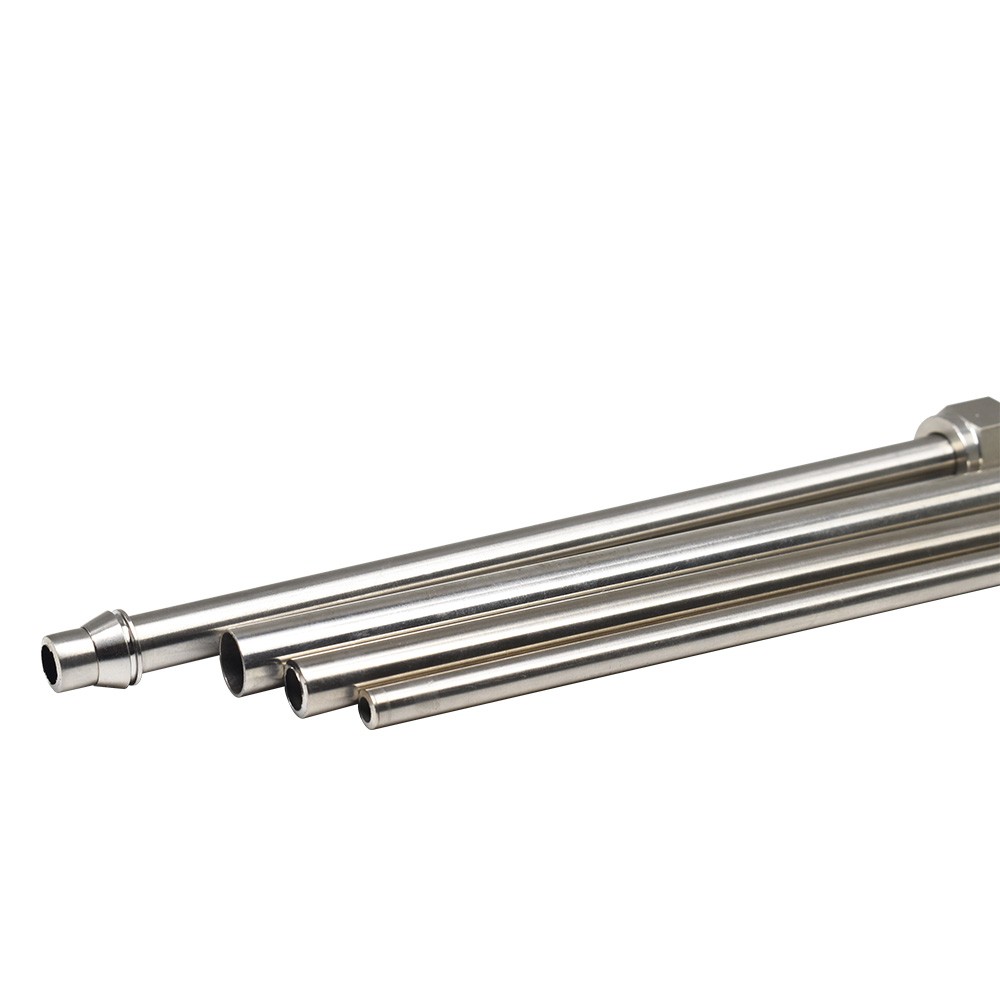
In the vast ecosystem of industrial manufacturing and fluid transmission, threads act as the "joints" that hold the mechanical world together. Yet, for many procurement professionals, the codes "NPT", "PT", or "PF" remain a source of profound confusion. This guide places these common thread types under the microscope.
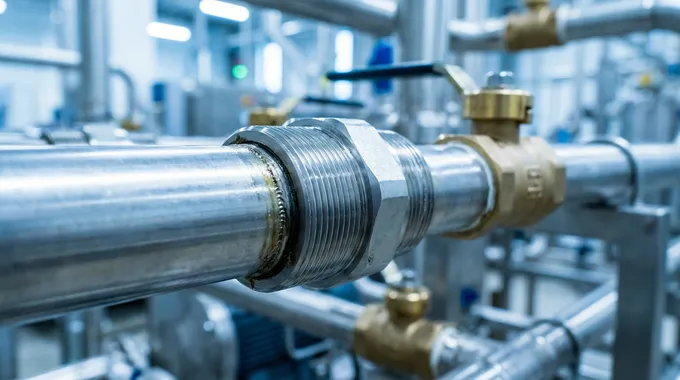
01. Deciphering the "Identity Code": A Deep Dive into NPT, PT, and PF
To the untrained eye, a screw is a screw. But in the world of fluid power, the geometry of that spiral makes all the difference. To distinguish them, we must analyze three core DNA markers: Thread Angle, Taper, and Sealing Philosophy.
1. NPT (National Pipe Thread) — The American "Tough Guy"
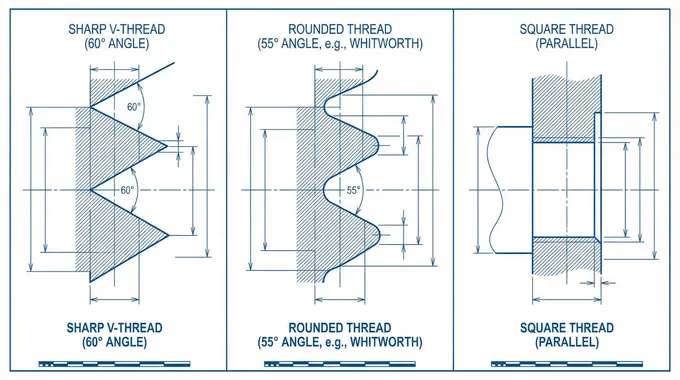
• The Profile (60°): The standard-bearer for North American industry. Its defining feature is the 60-degree angle, resulting in a sharper, more aggressive tooth profile.
• The Structure (Tapered 1:16): Visually, it looks like a cone rather than a cylinder. The diameter changes by 1 unit for every 16 units of length.
• Sealing Logic ("Crush to Seal"): NPT operates on an "interference fit." The tapered male thread wedges into the female thread, deforming slightly to form a seal.
2. PT (Pipe Thread) — The British "Gentleman"
• The Profile (55°): Commonly known as BSPT. The 55-degree angle creates a profile that is slightly more rounded at the crests and roots than the NPT.
• The Structure (Tapered 1:16): Like NPT, it uses a conical taper to tighten.
• Sealing Logic ("Assisted Sealing"): The rounded Whitworth thread form is less aggressive. It relies more heavily on sealing compounds—hemp, paste, or tape—to ensure a leak-free joint.
3. PF (Parallel Fixed Thread) — The Precision "Straight Shooter"
• The Profile (55°): Often known as BSPP or "G" thread.
• The Structure (Cylindrical): No taper. The diameter is consistent from the first thread to the last. It functions like a standard bolt.
• Sealing Logic ("Gasket Dependent"): A PF thread cannot seal on the threads themselves. Sealing is achieved entirely by compressing a soft material (O-ring or bonded washer) against the flat face.
02. The "Chasm" Between Systems: Metric vs. Imperial
The conflict between NPT and PT/PF represents a fundamental clash between the American industrial system and the British/Metric system.
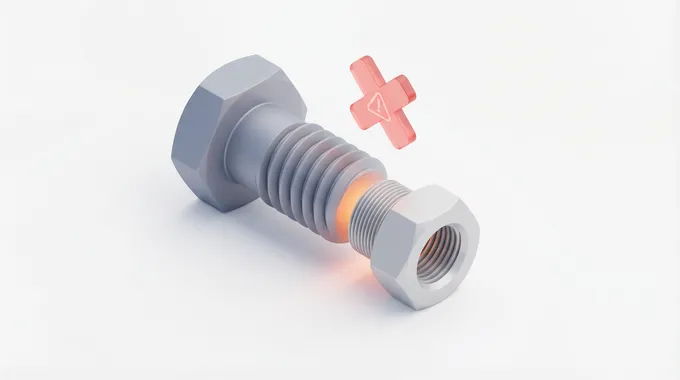
Warning: The 5-Degree Trap Why can't you screw an NPT fitting into a PT port? The danger lies in the 5-degree difference (NPT 60° vs. PT 55°). If forced, the sharp crests of NPT dig into the PT slopes, creating point contact instead of surface contact. Under high pressure, this connection will leak or shear off. |
The "Rashomon" of Nominal Dimensions
Another hurdle is the disconnect between the name and the size. When you see "1/2 NPT", do not expect to measure 12.7mm (0.5 inches). The "1/2" refers to the Nominal Pipe Size (internal flow capacity). The actual Outer Diameter is approximately 21.3mm.
03. Application Scenario Guide
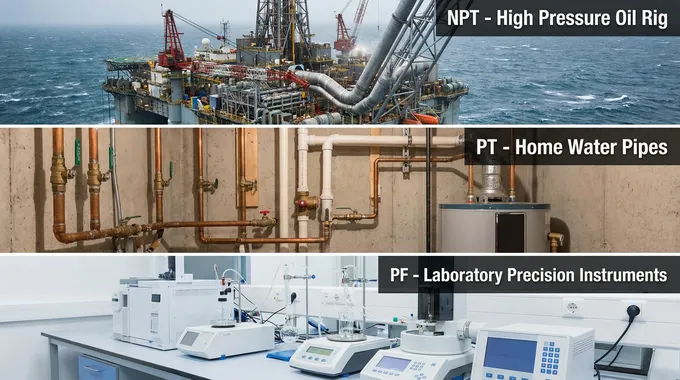
NPT: The Cornerstone of High Pressure Primary Domains: Oil & Gas, Petrochemical, Hydraulic Systems. The Logic: The 60° angle and sharp taper create a robust mechanical lock. In high-pressure environments, the "crush seal" offers structural integrity against vibration. |
PT (BSPT): The Global Standard for Utilities Primary Domains: Water Supply, Commercial HVAC, Low-Pressure Gas. The Logic: PT threads are forgiving and cost-effective. Combined with modern sealants, they offer reliable performance for civil infrastructure. |
⚙️ PF (BSPP/G): The Choice for Precision Primary Domains: Instrumentation, Hydraulics (Europe), Pneumatics. The Logic: Since they don't rely on thread deformation to seal, they allow for frequent disassembly. Ideal for gauges and sensors that require positioning adjustments. |
04. Purchasing Pitfall Avoidance Guide
1 | Demand the Full Standard Name Never accept "3/4 inch thread." Clarify if it is NPT, PT, or PF. Note that "pipe thread" in the US usually means NPT, while elsewhere it implies BSPT. |
2 | Watch the Pressure Rating Standard threads have limits. For systems >10,000 psi, upgrade to cone-and-thread fittings or SAE flanges. |
3 | Material Compatibility & Galling |
Stainless Steel NPT fittings are prone to cold welding. Specify silver plating or nickel-based anti-seize compounds. | |
4 | Supply Chain Geography Match ports to the destination. Sending NPT equipment to rural France (where PT dominates) creates maintenance nightmares. |
05. Real Case Study: The $2 Million Lesson
The Incident: A chemical corporation sourced 500 steam valves. The spec called for NPT 3/4, but they accepted PT 3/4 substitutes.
The Failure: Installers forced the 55° PT valves into 60° NPT pipes. During hot commissioning (800 psi steam at 300°C), thermal expansion degraded the tape, and the threads sheared off.
The Catastrophe: A valve blew off like a bullet. The facility faced an immediate safety shutdown.
Total Financial Impact: > $2,000,000 (Lost productivity, rework costs, and 3-month delay). |

Conclusion: The Art of Precision
Thread selection is where engineering theory meets procurement reality. As purchasing professionals, our value lies in acting as the gatekeeper of compatibility. By understanding the distinct "personalities" of NPT, PT, and PF threads, we protect our organizations from invisible but expensive risks.
Disclaimer: The content of this article is for educational purposes only. Always defer to certified project design drawings and consult with professional engineers.