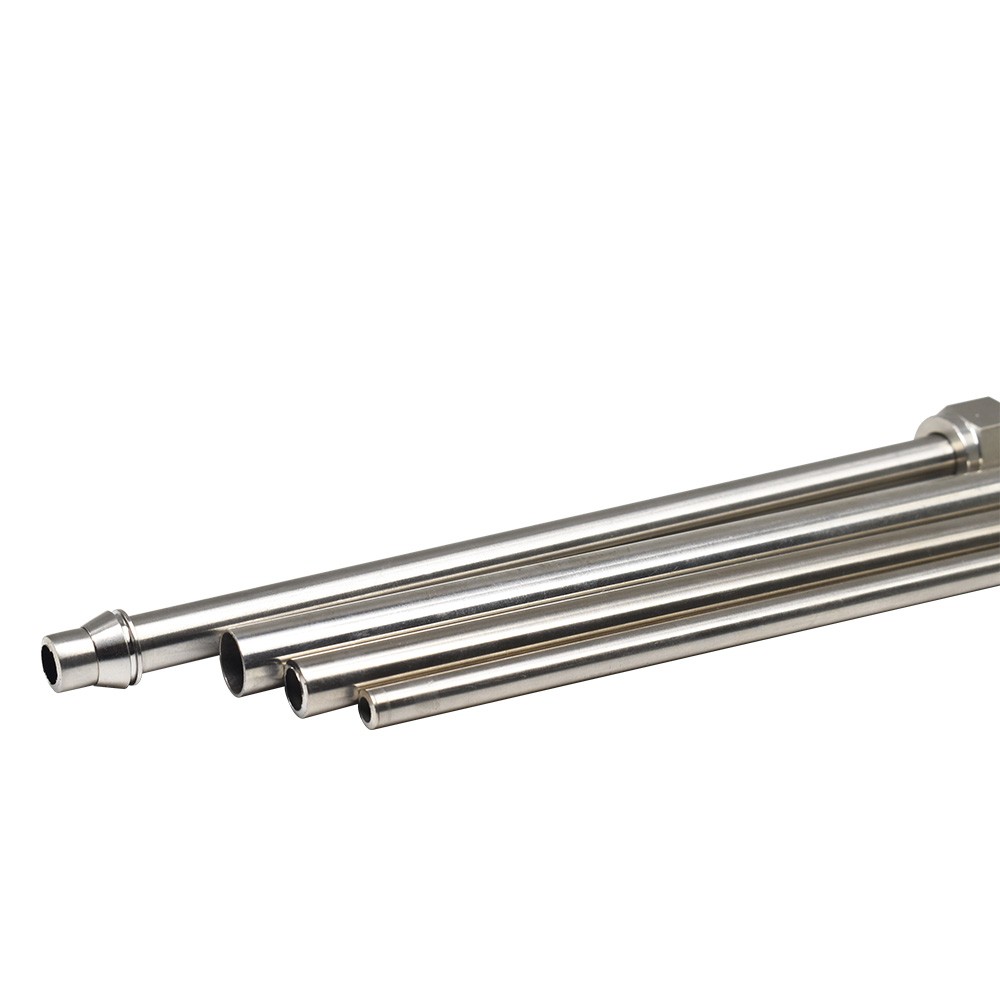
In instrumentation pipeline systems, there's a valve that appears understated yet supports half the battle of precision control—the 316 stainless steel ferrule needle valve. From oil pipelines in refineries to high-purity gas lines in semiconductor workshops, from corrosive media in chemical plants to sanitary piping in pharmaceutical facilities, its presence is ubiquitous. But "easy to use" doesn't mean "universal." Where does the 316 stainless steel ferrule needle valve truly excel? And what pitfalls must you avoid? Let's break it all down in one comprehensive guide.
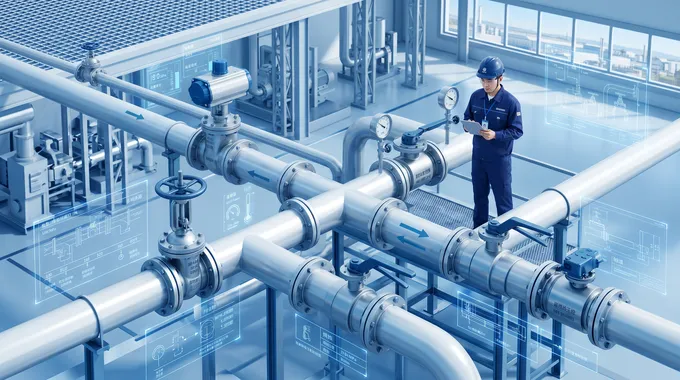
What Exactly Is It?
The term "316 stainless steel ferrule needle valve" combines three key elements: 316 stainless steel refers to the valve body material, ferrule indicates the connection method, and needle valve describes the internal structure. The valve core features a needle-shaped conical body, with handwheel rotation driving the valve stem up and down to achieve precise flow path opening/closing or fine flow adjustment. Nominal diameters range from DN3 to DN25, working pressures span from PN2.5 MPa to PN40 MPa (with high-pressure models reaching 16–200 MPa), and operating temperatures cover an impressive range from -80°C to 570°C. These specifications alone demonstrate its broad applicability.
Five Core Advantages: Why It Became the "Standard" for Instrumentation Pipelines
1. Outstanding Corrosion Resistance
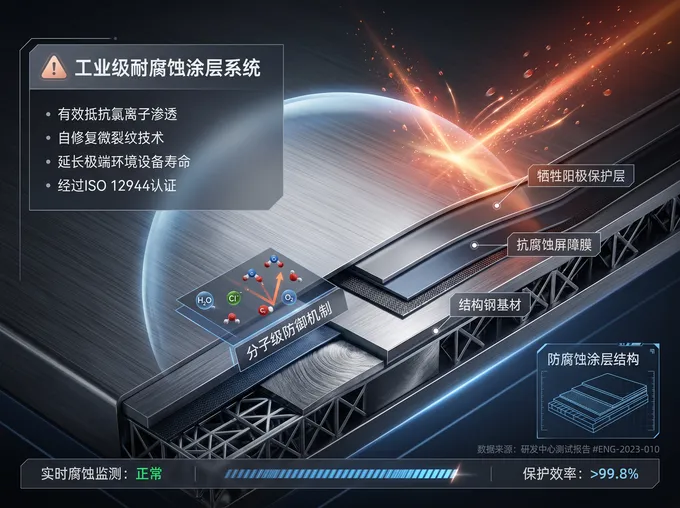
316 stainless steel adds 2%–3% molybdenum (Mo) to the 304 base composition. This seemingly small addition of molybdenum is the "secret weapon" against chloride ion corrosion. In field tests at coastal chemical plants, 304 stainless steel valves showed severe pitting after one year, while 316 exhibited significantly less corrosion. For chloride-containing environments, weak acids (such as acetic acid, citric acid, dilute sulfuric acid), and seawater desalination auxiliary pipelines, 316 is almost the most cost-effective choice. In pharmaceutical and food industries, 316's excellent corrosion resistance naturally meets sanitary cleaning requirements.
2. Ferrule Connection—A "Game-Changer" in Installation
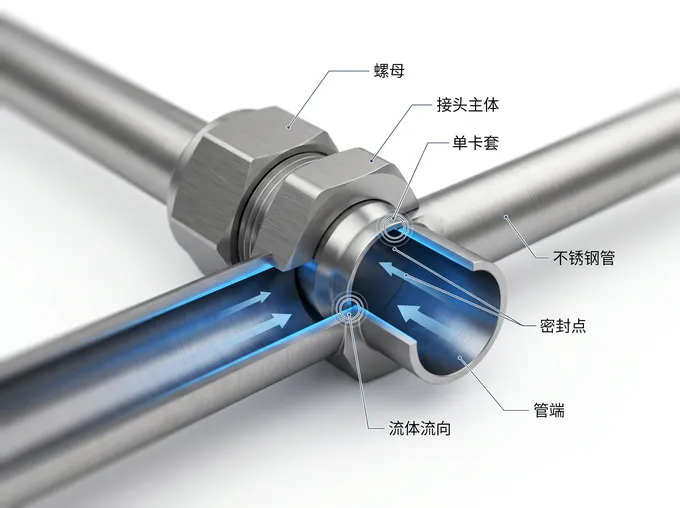
Traditional welded connections suffer from slag residue, heat-affected zone deformation, and dismantling difficulties akin to "defusing a bomb." Ferrule connections completely eliminate these pain points: no hot work, no welding required. Simply slide the ferrule onto the steel tube and tighten the nut with a wrench—the ferrule's cutting edge bites into the tube wall to form a seal. Installation speed increases several-fold, and disassembly is equally convenient. Future maintenance or valve replacement doesn't require destroying the entire gas line. More importantly, ferrule connections provide extremely strong sealing performance with virtually no leakage—a critical requirement for high-purity gas lines and toxic/hazardous media pipelines.
3. Superior Sealing Performance with Ultra-Low Leakage Rates
Ferrule needle valves employ "dual insurance" sealing: the first mechanical seal forms between the ferrule and pipe fitting, while the second precision seal occurs between the valve core cone surface and valve seat. Sealing materials can be selected from PTFE (Teflon), copper, hard alloys, and more, flexibly matched according to pressure and temperature requirements. Some premium models feature dual soft-hard sealing structures or dynamic load sealing designs, with each unit tested individually before leaving the factory according to MSS SP-99 or API 598 standards—producing no bubbles within 1 minute under 7 MPa nitrogen pressure. This sealing level fully complies with GB50646-2020 and SEMI S2 standards, proving reliable in semiconductor lithography and etching processes where zero leakage tolerance is mandatory.
4. High-Precision Flow Adjustment—A True "Fine-Tuning Valve"
The needle-shaped conical valve core moves up and down along the fluid centerline, with the valve port opening area changing continuously from zero to maximum, achieving stepless adjustment from closed to fully open. Flow coefficients (Cv values) typically range from 0.4 to 2.25. Combined with small diameter designs (2.0 mm, 4.4 mm, 6.4 mm, etc.), control precision for small-flow, high-pressure media far exceeds ordinary globe valves. This is precisely why it's called an "instrumentation needle valve"—in scenarios like pressure gauge matching and transmitter valve groups, it serves as the "precision scale" for flow measurement.
5. Compact Structure with High Temperature and Pressure Resistance
Maximum nominal pressure reaches PN40 MPa. With PTFE packing, operating temperatures can reach 232°C; flexible graphite packing withstands up to 540°C. Meanwhile, the valve body is compact and lightweight with low design torque, ensuring easy operation. In space-constrained scenarios such as power stations, oil refineries, petrochemical facilities, and hydraulic/pneumatic pipelines, this compact design is often the only viable solution.
Four Key Limitations: Being Honest About the Drawbacks
Limitation 1: Post-Welding Intergranular Corrosion Risk—316's "Achilles' Heel"
316 stainless steel has a carbon content around 0.08%. During welding, carbides precipitate at grain boundaries, creating conditions for intergranular corrosion. Once the application involves welding without subsequent heat treatment, 316 may face "internal and external troubles"—external medium corrosion combined with internal grain boundary cracking, significantly reducing valve lifespan. This is why experienced engineers directly specify 316L (carbon content ≤0.03%) instead of 316 for welding applications. If your system involves extensive welding procedures, absolutely upgrade to 316L—the additional cost is far less than the price of later valve replacement.
Limitation 2: High Chloride Ions + High Stress = Stress Corrosion Cracking
Don't assume adding molybdenum solves everything. Under the triple assault of "high pressure + high chloride + high stress" in concentrated brine, deep-sea environments, or oil/gas fields containing hydrogen sulfide, 316 still experiences stress corrosion cracking. This is when duplex steel 2205 enters the picture—with twice the strength of 316 and crushing superiority in stress corrosion resistance. However, duplex steel costs 1.5–2 times more than 316 and cannot exceed 300°C for long-term use, making it worthwhile only for extreme conditions.
Limitation 3: Lower Strength Than Duplex Steel, Limited in High-Pressure Large-Diameter Applications
316's yield strength is approximately 205 MPa, appearing inadequate for deep-sea pipelines, high-pressure wellhead valves, and similar applications. If system pressure consistently exceeds PN32 MPa with larger pipe diameters, consider evaluating duplex steel or super duplex steel solutions; otherwise, valves may fail due to fatigue under high-pressure pulses.
Limitation 4: Ferrule Connections Demand Precise Installation Craftsmanship—Poor Installation Equals Wasted Effort
Ferrules appear simple but actually have strict requirements for tube outer diameter tolerances, surface roughness, and tightening torque. Tube burrs, ferrule position offset, or uneven torque can all lead to seal failure. Domestic ferrule fittings typically have cutting edge surface roughness of Ra≥0.8μm, while imported brands (such as Swagelok) achieve Ra≤0.2μm through electrolytic processing, showing significant differences in sealing consistency. Installation requires using specialized wrenches to tighten diagonally and uniformly, reaching specified torque in multiple stages, followed by pulling the ferrule to verify bite status—skipping any step may plant seeds for leakage.
Selection Decision Guide: One Table Clarifies Everything
| Application Scenario | Recommended Material | Connection Method | Notes |
|---|---|---|---|
| Regular gases, compressed air, chloride-free environments | 304 sufficient, budget-friendly | Ferrule | King of cost-effectiveness |
| Chloride-containing media, weak acids, coastal environments | 316 | Ferrule | Strong pitting resistance |
| Chloride-containing + welding required | 316L | Ferrule/Welding both acceptable | Eliminates intergranular corrosion |
| High pressure + high chloride + high stress | Duplex steel 2205 | Ferrule | Higher cost but life-saving |
| Semiconductor high-purity gas/specialty gas | 316L + diaphragm structure | Ferrule | Zero dead volume + zero leakage |
Conclusion
The 316 stainless steel ferrule needle valve is essentially a "balanced performer"—it finds the optimal equilibrium among corrosion resistance, sealing performance, installation convenience, and cost, which is fundamentally why it dominates in chemical, petrochemical, instrumentation, pharmaceutical, and other fields. But balanced doesn't mean omnipotent. Upgrade to 316L for welding applications, choose duplex steel for extreme corrosion environments, and respect installation craftsmanship specifications. Choose correctly, and it becomes the most worry-free component in your pipeline system; choose incorrectly, and it becomes your most expensive lesson.