Search for more information
This is not simply “rust,” and it is rarely solved by using a bigger wrench. The real problem is thread galling—also called cold welding—and high temperature can make it dramatically worse.
The practical solution is to control friction before assembly. In most high-temperature applications, that means selecting the correct high-temperature anti-seize compound and applying it properly. But the compound is only part of the solution. Material pairing, installation speed, surface condition, and torque must work together.
Stainless steel protects itself with a thin chromium-rich oxide film. That film provides excellent corrosion resistance, but stainless steel also tends to have relatively high friction and strong adhesion under sliding contact.
As a nut turns on a bolt, microscopic high points on the mating thread surfaces rub against each other. Under pressure, the protective oxide film can break locally. Bare metal is exposed, opposing surfaces begin to adhere, and tiny fragments transfer from one thread to the other.
The rougher the surface becomes, the more friction and heat it generates. Adhesion then accelerates in a self-reinforcing cycle:
oxide-film breakdown → metal contact → material transfer → rising friction → seizure
Once galling starts, additional force usually makes it worse. The fastener may lock, strip, twist off, or damage the equipment’s internal thread.
High-temperature service adds several stresses at the same time.
First, thermal expansion changes the contact pressure between the male and female threads. Different components may expand at different rates, especially when dissimilar alloys are used.
Second, many conventional oils and greases oxidize, evaporate, carbonize, or lose lubricity. A thread that was lubricated during assembly may effectively become dry after prolonged heat exposure.
Third, repeated heating and cooling can create oxidation deposits and increase interference. At elevated temperatures, diffusion and adhesion between clean metal surfaces may also become more severe.
The result is familiar: a fastener that installed normally becomes almost impossible to remove after service.
A properly selected anti-seize compound forms a sacrificial barrier between mating threads. It reduces direct metal-to-metal contact, stabilizes friction during assembly, and helps prevent oxidation products from bonding the surfaces together.
However, not every product labeled “anti-seize” is suitable for every application.
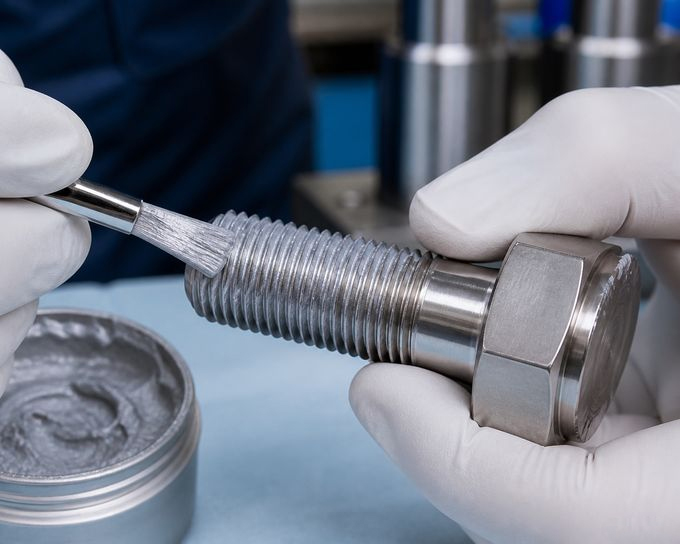
Check the manufacturer’s continuous-service rating, not only the advertised peak temperature. The carrier may burn off during heating, so the remaining solid lubricants must still provide separation under service conditions.
Copper-based compounds are common, but they are not universally appropriate. Electrical, galvanic, contamination, and process restrictions may rule them out. Nickel-based formulations are often chosen for very high temperatures or demanding alloy combinations, while metal-free ceramic formulations may be preferred where metallic contamination is unacceptable.
For oxygen service, food processing, cleanrooms, or other regulated environments, use only products specifically approved for that duty.
More is not better. Clean the threads and remove chips, scale, old compound, and abrasive dirt. Apply a light, even coating to the engaged male threads and, where appropriate, the nut’s bearing surface. Avoid packing large amounts into a blind hole, where trapped compound can create hydraulic pressure.
The objective is complete separation of the contact surfaces—not a thick layer of paste.
This is one of the most important points in the entire process.
Torque specifications are strongly affected by friction. Anti-seize lowers thread and bearing friction, which means the same tightening torque can produce significantly higher bolt tension than a dry assembly.
If a technician applies the original dry torque after lubrication, the bolt may be overstretched, the joint may be overloaded, or the threads may fail.
Never use a universal “torque reduction percentage” without verification. Follow the fastener designer’s procedure, the equipment manual, or the anti-seize manufacturer’s published torque factor. For critical joints, establish a validated torque-tension method for the exact fastener, finish, lubricant, and service condition.
High-speed impact tools generate localized frictional heat and make galling more likely. Start threads by hand, confirm alignment, and use controlled, moderate tightening speed.
Burrs, dents, metal chips, and abrasive particles concentrate pressure and rupture the oxide film. Inspect and clean both mating parts before assembly. Replace fasteners with visibly damaged threads.
Identical stainless grades can be particularly prone to galling. Where the design allows, consider different alloy grades, hardness levels, surface treatments, coatings, or a suitable nut-and-bolt combination. The final choice must still satisfy corrosion, strength, temperature, and process requirements.
Cross-threading, excessive preload, and poor alignment sharply increase contact stress. Use calibrated tools and make sure the joint seats evenly.
Before assembling stainless steel threads for high-temperature service, use this checklist:
Confirm the fastener grade, temperature range, chemical environment, and required approvals.
Select a compatible high-temperature anti-seize compound.
Inspect, clean, and dry the threads.
Apply a thin, uniform film only where required.
Start the fastener by hand and tighten slowly.
Use the approved lubricated torque value—not the dry value.
Record the product, batch, torque, and installation date for critical equipment.
During shutdown, loosen the joint in a controlled manner; do not immediately attack a seized fastener with maximum impact force.
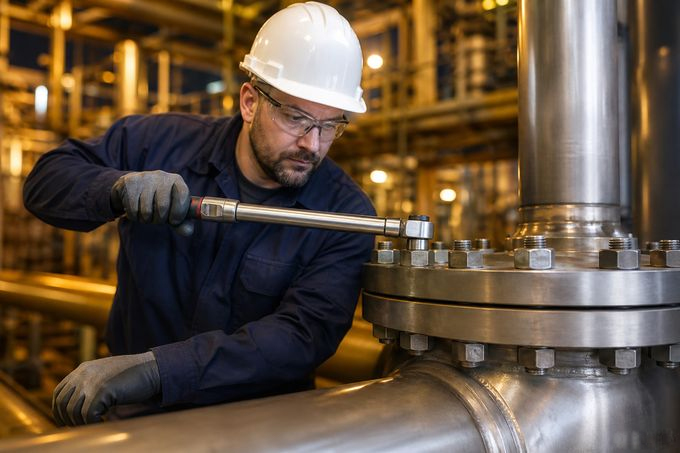
Stainless steel thread seizure is not random. It is the predictable result of adhesive contact, rising friction, heat, surface damage, and unsuitable assembly practice.
The “one move” that changes the outcome is simple: control the thread interface before tightening. In high-temperature service, the most practical method is usually a correctly selected and properly applied anti-seize compound—supported by clean threads, controlled installation speed, compatible materials, and corrected torque.
Do that, and maintenance changes from cutting, drilling, and replacing damaged parts to a clean, controlled disassembly.
The cheapest time to solve a seized fastener is before it seizes.