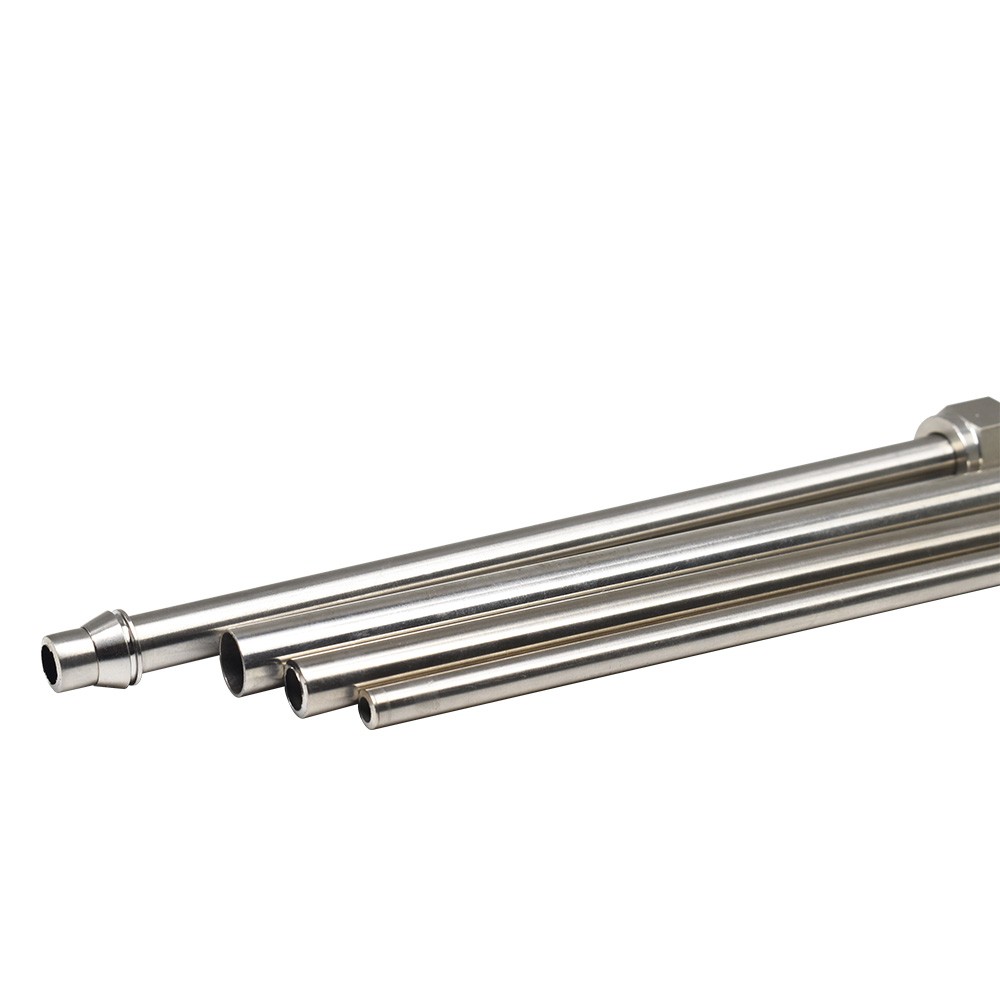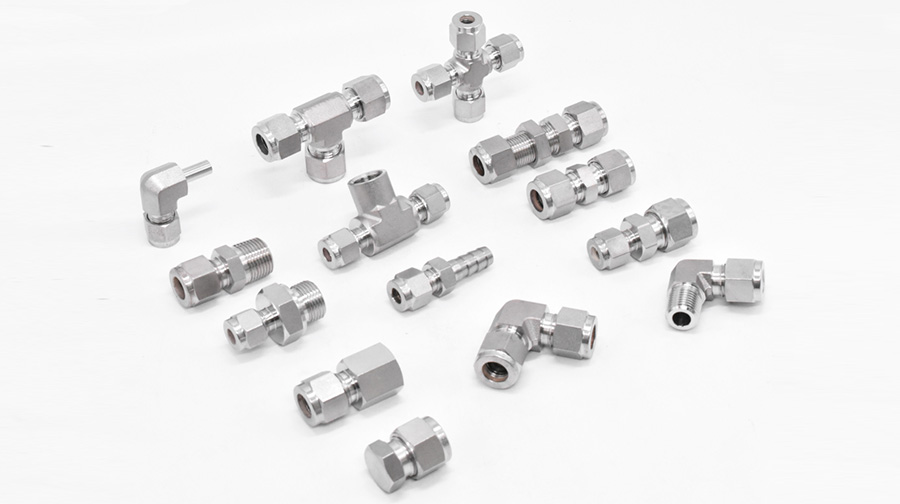
In the complex arterial networks of industrial piping systems, the humble ferrule fitting plays a role far more critical than its size suggests. It is the linchpin of fluid control, yet it remains a frequent point of failure. Industry statistics present a sobering reality: approximately 30% of leakage failures in hydraulic systems stem directly from ferrule fitting malfunctions. A leak is rarely just a leak. In high-pressure environments, it represents a breach of safety protocols; in chemical processing, it signifies environmental hazard; and in manufacturing, it equals costly downtime. This comprehensive guide systematically deconstructs practical inspection schemes for ferrule fittings, moving beyond simple guesswork.
I. Basic Visual and Tactile Inspection Methods
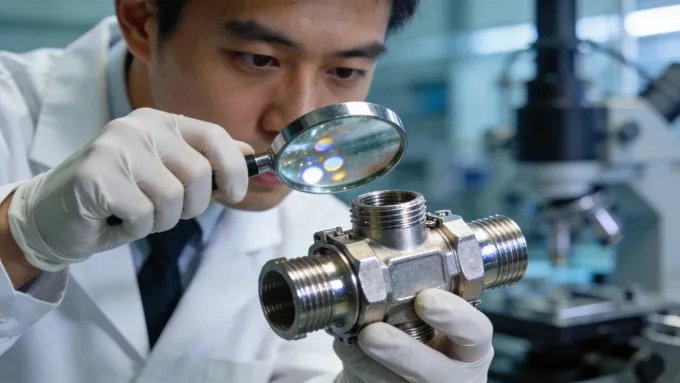
1. Preliminary Visual Screening
The Annular Protrusion Indicator: A properly swaged ferrule must form a uniform annular protrusion (a slight bowing) with a height of 0.05–0.1 mm. Absence or unevenness indicates installation errors.
Thread Integrity and Galling: Inspect nut threads and taper surfaces for scratches or deformation (galling), which can break the metal-to-metal seal. Such damage is irreversible.
The Lifecycle of Sealing Rings: Check elastomeric seals for permanent deformation, cracks, or aging hardening. Environmental factors, like a standard nitrile rubber ring failing within 2 years in chlorine mediums, must be considered.
2. Tactile Auxiliary Judgment
The "Bite" Point: During tightening, a distinct change in resistance signals the ferrule has cut into the pipe. This is the stop signal to avoid over or under-tightening.
The Shake Test: Gently shaking the pipe at the joint can reveal looseness, suggesting insufficient preload or improper pipe insertion.
The Temperature Gradient: Hydraulic leaks often cause a local temperature rise of 3–5℃, while gas leaks (Joule-Thomson effect) can cause a noticeable drop in temperature.
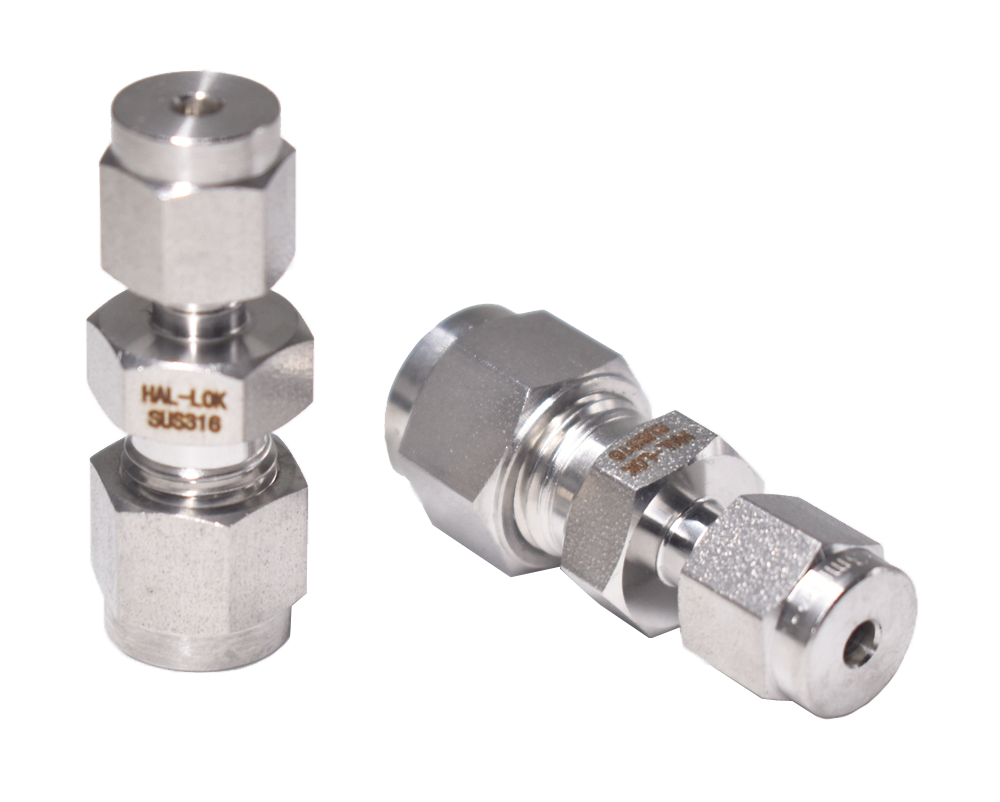
II. Application of Professional Testing Technologies
Pressure Holding Test
Procedure: Isolate the system, pressurize to 1.5 times the working pressure, and hold for 30 minutes.
Criteria: Using a high-precision gauge (0.01 MPa resolution), the pressure drop should be ≤ 0.5%.
Pro Tip: Account for ambient temperature changes which can cause "false positive" pressure drops.
Leak Detection Agent Method
Method: Spray fluorescent tracer agent on the fitting and scan with a UV lamp. Leaks will glow brightly.
Advantage: Highly sensitive (detects leaks as low as 0.01 mL/min), increasing inspection efficiency by 4 times and reducing false negatives to below 2% in practice.
Ultrasonic Testing Technology
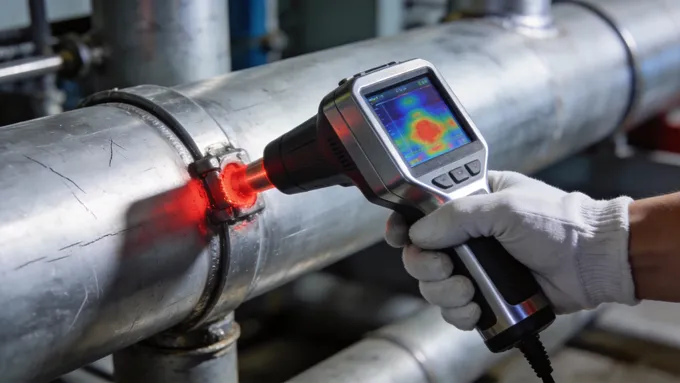
Acoustic Imaging: Handheld imagers visualize ultrasonic sound (20–100 kHz) generated by leaks, showing them as colored spots on a screen.
Capabilities: Non-intrusive and can detect internal leaks through a 10 mm thick metal wall with a sensitivity of 0.001 mL/s, ideal for insulated or inaccessible piping.
III. Typical Fault Treatment
Repair of Installation Defects
The Depth Issue: Ensure pipe is fully inserted by marking a depth line (Ferrule Length + 2 mm) on the pipe.
The Torque Dilemma: Use a digital torque wrench. Reference values: Carbon Steel (15–20 N·m), Stainless Steel (12–18 N·m).
The Teflon Tape Myth: Strictly prohibit using Teflon tape on ferrule threads; it alters torque readings and can contaminate the system. Replace damaged fittings.
Replacement of Aged Materials
| Seal Type | Replacement Cycle | Notes |
|---|---|---|
| Ordinary Nitrile Rubber | 2 years | Temp ≤ 80℃ |
| Fluororubber (FKM) | 5 years | Temp ≤ 150℃ |
| Perfluoroelastomer (FFKM) | 8 years | Harsh chemicals |
Additionally, the metal ferrule itself fatigues. If edge wear exceeds 0.1 mm, it must be discarded.
Countermeasures Against Vibration Fatigue
Anti-Loosening Upgrade: In high-vibration areas, replace standard nuts with anti-loosening types (e.g., Spiralock), which have an 80% lower preload attenuation rate.
Systemic Damping: Install rubber shock absorbers or spring supports to control system vibration frequency below 10 Hz.
Conclusion
Controlling ferrule fitting leakage requires a full-process system: "Prevention — Detection — Treatment." By implementing standardized installation, regular professional testing, and timely fault treatments, facilities can control their leakage rate to below 0.1%. The future is intelligent, shifting towards online monitoring systems using acoustic emission and infrared thermal imaging to predict failures before they happen.