Search for more information
In the stainless steel market, products labeled “316” abound—from architectural curtain walls to medical devices, from marine components to food containers—yet their appearances vary dramatically: some gleam like mirrors, others exhibit a matte finish; some remain pristine even after prolonged use, while others develop rust spots or discoloration. Behind these differences lies the complex interplay of material composition, manufacturing processes, and environmental adaptability.
The core composition of 316 stainless steel is 18% chromium, 10% nickel, and 2-3% molybdenum. However, significant fluctuations occur in actual production.
For instance, some manufacturers reduce molybdenum content below 1.5% to cut costs, making products more prone to rust spots in chlorine-rich environments (such as coastal areas). A welcome tower in Hainan constructed with S32001 duplex stainless steel (containing 1.5-2.5% molybdenum) showed no corrosion after five years in a high-temperature, high-humidity environment, whereas standard 316 stainless steel might exhibit corrosion marks within two years under similar conditions.
Additionally, the dual-phase structure (austenitic + ferritic) of 316 stainless steel results in differing surface reflectivity due to its microstructure, potentially yielding a more uniform luster after polishing.
Processing techniques are critical in determining the appearance of 316 stainless steel. Taking surface treatment as an example:
Multiple polishing stages reduce surface roughness to Ra<0.01μm, achieving over 90% reflectivity. Commonly used in high-end architectural decoration and medical devices. However, mirror finishing demands extremely flat sheet surfaces; even minor imperfections become visible under strong light.
Sanding belts create uniform linear textures that conceal minor scratches while enhancing fingerprint resistance. Widely used in kitchenware and elevator panels.
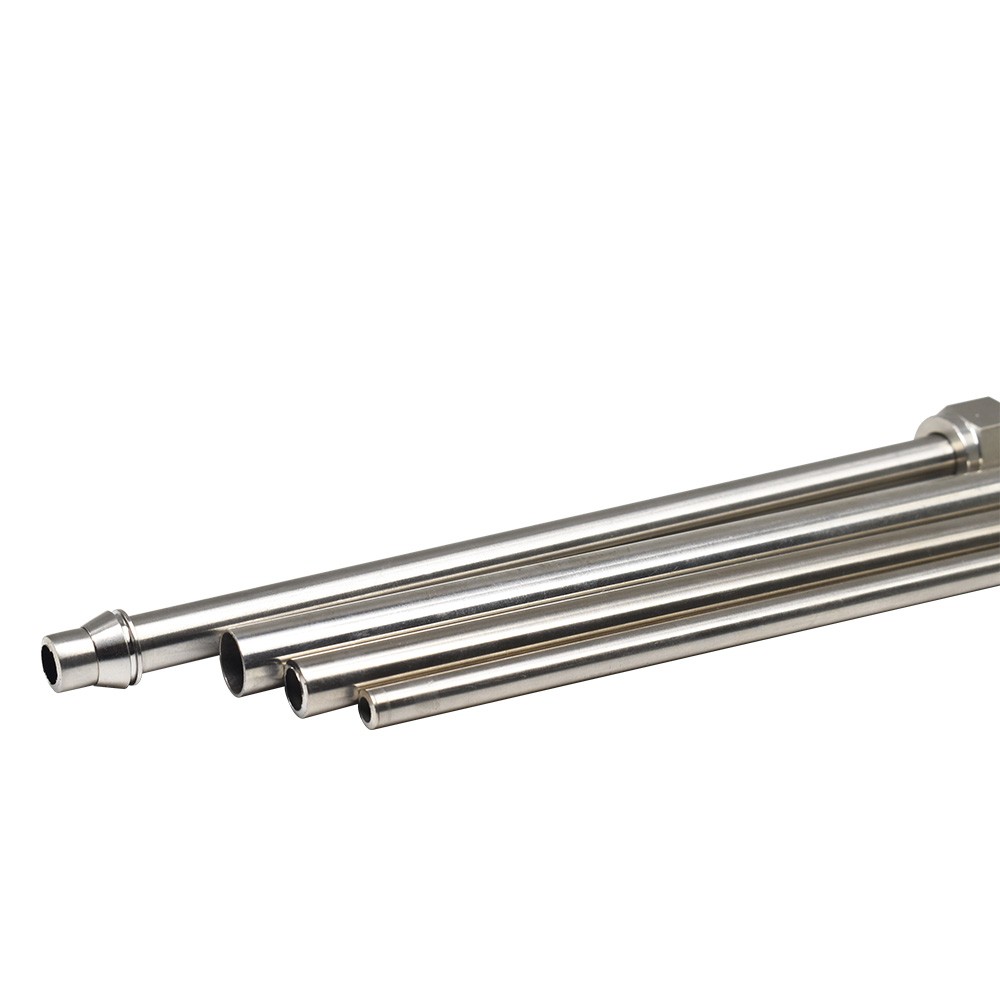
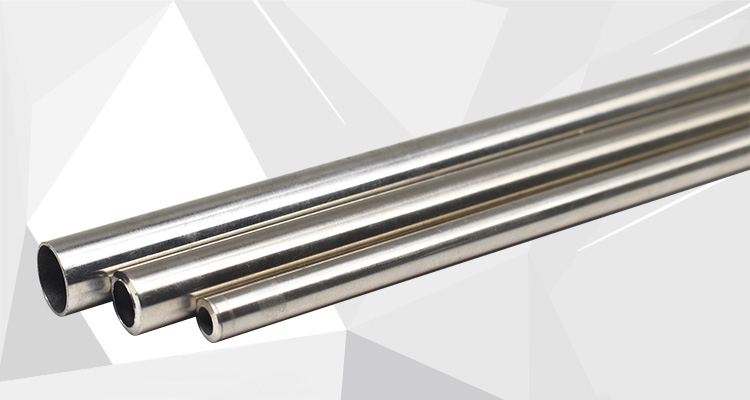
Electrochemical dissolution removes surface micro-protrusions, forming a more uniform gloss layer than mechanical polishing while improving corrosion resistance. EP-grade 316L stainless steel tubing is extensively used in food processing equipment, achieving surface roughness as low as Ra<0.05μm.
Additionally, forming processes impact appearance. Cold-rolled sheets offer smoother surfaces but exhibit higher work hardening; hot-rolled sheets feature rougher surfaces yet lower costs. If welding processes omit acid pickling and passivation, weld zones may exhibit color variations that compromise overall aesthetics.
The corrosion resistance of 316 stainless steel is not absolute; environmental factors significantly alter its appearance.
In seawater or salt spray environments, 316 stainless steel may develop pitting corrosion as chloride ions penetrate the passivation layer. A chemical plant's reactor lined with 316 stainless steel developed a uniform brown oxide film on its surface after three years. While functional, this affected appearance. In contrast, similar equipment using 316L stainless steel (carbon content <0.03%) exhibited significantly reduced surface oxidation due to its superior resistance to intergranular corrosion.
In chemical processing equipment, 316 stainless steel may form a hazy oxide layer due to acid mist. Specially treated 316L stainless steel exhibits a more stable surface oxide layer, reducing corrosion rates by over 60%.
Between 800-1575°C, 316 stainless steel may exhibit sensitization (carbide precipitation along grain boundaries), diminishing surface luster. Aerospace-grade 316 stainless steel undergoes specialized solution treatment with rapid cooling to suppress carbide formation, preserving a bright finish even in high-temperature conditions.
Currently, some low-priced “316 stainless steel” products on the market are inferior substitutes.
For example, 201 stainless steel (containing manganese but no molybdenum) is passed off as 316 stainless steel, with differences masked by sandblasting or electroplating. Such products initially appear identical to genuine ones but show rusting after 3-6 months of use.
Additionally, some manufacturers omit critical processes like polishing and passivation, resulting in rough surfaces prone to harboring dirt and grime.
Consumers can distinguish authenticity by observing surface luster, feeling texture, and verifying certification marks. When necessary, stainless steel testing solutions can be used for verification.
The visual variations in 316 stainless steel fundamentally reflect the interplay of materials science, processing technology, and market integrity. From the enduring brilliance of Hainan's Welcome Tower to the corrosion resistance demands of chemical equipment, diverse applications present distinct challenges for 316 stainless steel. When making purchasing decisions, consumers must not only understand technical variations but also remain vigilant against market irregularities. By examining appearance, verifying certifications, and conducting simple tests, they can safeguard their interests. Only through such diligence can genuinely high-quality 316 stainless steel products continue to shine with the brilliance of technology and quality as time passes.