Search for more information
As a critical component within hydraulic systems, the performance of ferrule-type check valves directly impacts system stability and safety. During prolonged operation, these valves are prone to failure due to media contamination, component wear, or improper handling, rendering scientific and standardised maintenance essential. The following systematically outlines key maintenance considerations for ferrule-type check valves across four dimensions: routine inspection, fault resolution, operational protocols, and environmental management.
I. Routine Inspections: The Cornerstone of Preventive Maintenance
1. Cleaning and Seal Integrity Testing
Valve failure often stems from media contaminants jamming the spool, causing seal breaches or operational malfunctions. Regularly inspect the integrity of inlet-side filters (e.g., Parker-compatible filter elements). Clean or replace filter elements every 1-3 months based on media cleanliness to prevent welding slag, iron filings, and similar debris from entering the valve body. Simultaneously, wipe the valve body surface with dry compressed air or a soft cloth, focusing on removing oil and dust from connection points (e.g., threads, flanges) to prevent leakage caused by contaminant accumulation. Should abnormal pressure or excessive pressure drop occur in the system, decommission the equipment and disassemble the check valve. Flush the valve core, seat, and spring with a medium-compatible cleaner (e.g., hydraulic oil or anhydrous ethanol) to ensure no residue remains.
2. Core Component Condition Monitoring
Periodically inspect whether the sealing surfaces of the valve core and seat are flat. Minor scratches may be repaired by sanding with 400-grit or finer sandpaper; severe wear necessitates replacement with genuine manufacturer parts. As seals are wear-prone components, replacement is recommended every 6-12 months, prioritising materials compatible with the medium (e.g., nitrile rubber for oils, fluorinated rubber for corrosive media). Inspect springs for corrosion and loss of elasticity. Should manual pressure fail to fully reset the valve core, immediately replace with an original manufacturer spring to prevent medium backflow due to reset failure.
II. Fault Resolution: Precise Diagnosis and Repair
1. Malfunction and Leakage Remediation
Should the check valve fail to open/close correctly or exhibit reverse leakage, first investigate causes of valve core sticking. Common issues include burrs on the chamfered edges of the valve body bore or excessive clearance between the spool outer diameter and the bore. For burrs, cleaning followed by light tapping on the seat may restore functionality. If clearance exceeds specifications, re-machining or replacing the spool is required. When leakage occurs due to wear on the seat contact line after prolonged use, lapping the spool and seat or replacing components is necessary to ensure tight sealing contact.
2. Electromagnetic Pilot Valve Troubleshooting
For check valves controlled by electromagnetic pilots, inspect whether the inlet/exhaust ports are blocked by sludge or if the moving iron core is seized. After cleaning the pilot valve and iron core, if directional change remains unsuccessful, investigate electrical faults: first measure the electromagnetic coil voltage with a meter; if below rated value, check the control circuit power supply and limit switches. If voltage is normal, check for loose coil connections. Assess coil integrity by measuring resistance (replace if resistance is abnormal).
III. Operational Guidelines: Preventing Human Error
1. Installation and Removal Key Points
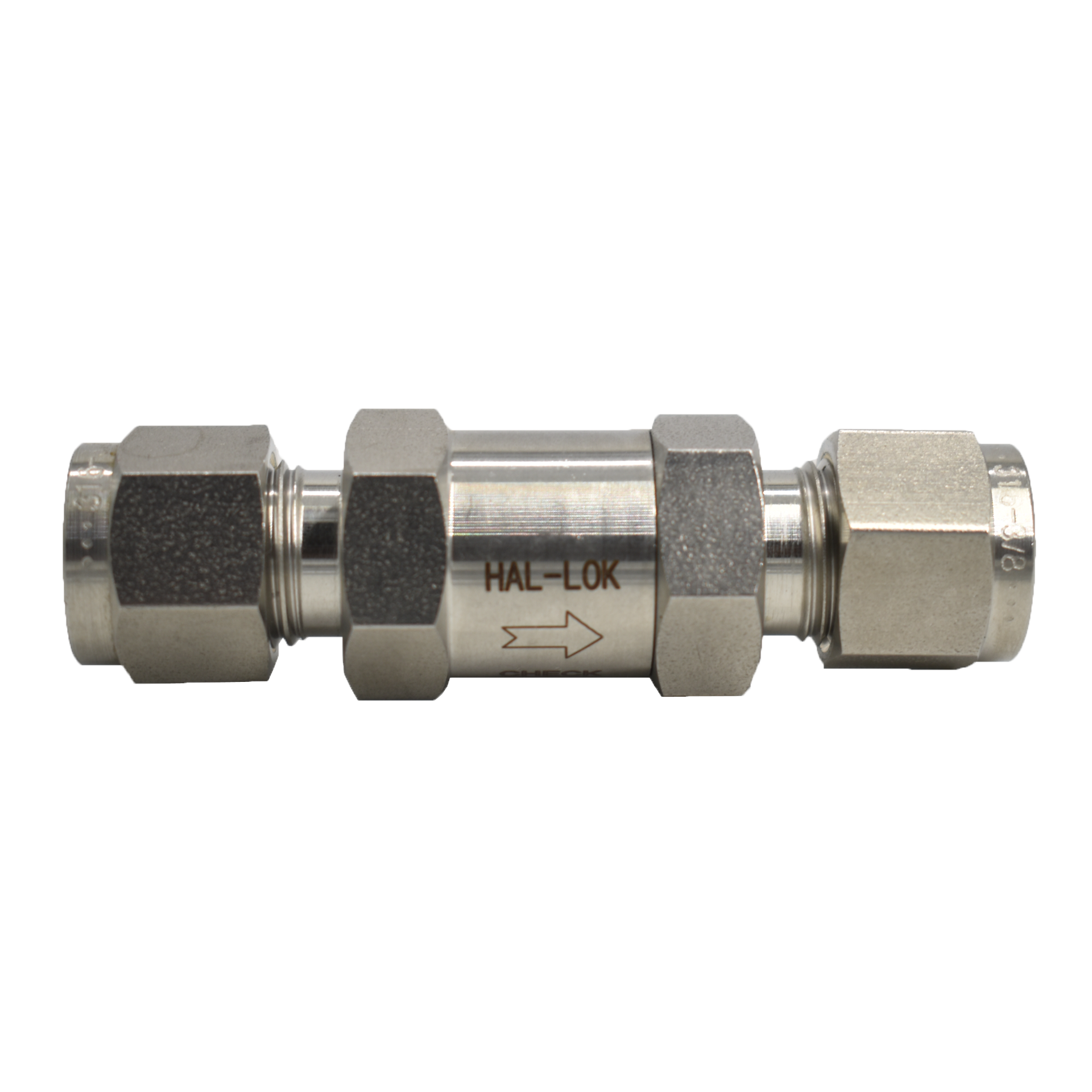
Before installation, close system inlet and outlet valves and relieve pipeline pressure to prevent media ejection injuries. Employ tools compatible with connection methods (e.g., wrench size matching flanges/threads). Follow the sequence: first loosen auxiliary components (e.g., lock nuts), then remove the main body to prevent valve body deformation or thread stripping. During installation, ensure the valve body arrow direction aligns with the medium flow. Incorrect orientation will render the check valve ineffective and may damage the valve core due to medium impact.
2. Operational Monitoring
Assess check valve status through a three-step method: observe, listen, and measure. Check for abnormal pressure gauge fluctuations or leaks at connection points. Listen for unusual ‘clicking’ noises (indicating insufficient spring tension) or ‘humming’ vibrations (signalling excessive medium flow velocity). After closing the inlet valve, verify that outlet pressure returns to zero to confirm proper check function. Immediately halt operation and conduct repairs if anomalies are detected.
IV. Environmental Management: Extending Service Life
1. Medium Compatibility Control
Ensure system media match the check valve material. Avoid using nitrile rubber seals with highly corrosive media or operating beyond rated temperature ranges (e.g., Parker models rated -20°C to 120°C). Regularly assess media contamination (e.g., hydraulic oil NAS rating). Replace media and flush the system if particulate content or moisture exceeds specifications.
2. Protection During Extended Downtime
When equipment is decommissioned seasonally, drain all media from the check valve (particularly water, corrosive liquids, or media prone to solidification) to prevent ice expansion or corrosion from prolonged stagnation. Store in a dry, ventilated environment free from corrosive gases, avoiding direct sunlight or proximity to heat sources. Prevent valve bodies from being crushed under stacked heavy objects.
Maintenance of ferrule check valves should adhere to the principles of ‘prevention-oriented, precise inspection, and standardised operation’. Regular cleaning, component testing, condition monitoring, and environmental control can significantly reduce failure rates and extend equipment lifespan. During practical maintenance, it is advisable to prioritise genuine manufacturer components and strictly follow the maintenance cycles and procedures outlined in the product manual to ensure effective upkeep.